4.8 · 100+ Google Reviews
· Mon–Fri 9AM–5PM EST
Get A Proposal

Why Is My Website Traffic Dropping?

Your Rankings Look Fine. So Why Has Traffic Disappeared?
You logged in, saw the numbers, and felt your stomach drop. Fewer visitors, fewer calls, fewer jobs — and you didn’t change a thing. We’ve seen this exact situation hundreds of times, and there’s almost always an explanation. Let’s find yours.
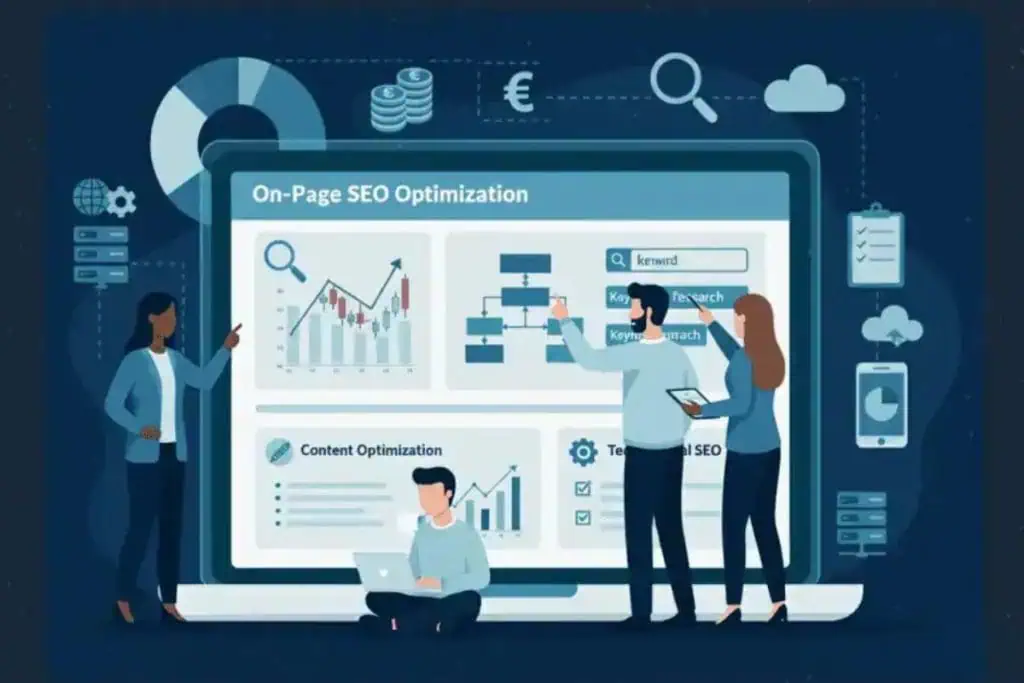
Illustration of four people analyzing on-page SEO optimization data on a large screen, with graphs, charts, search bars, and icons representing digital marketing, content, and technical SEO in the background.
Why Is My Website Getting Fewer Visitors? Long Island

What Makes Our Diagnosis Different

17-Plus Analytics Applications

We cross-reference over 17 data sources to find the real cause of your traffic drop — not just a best guess from one dashboard.

No Contracts, Ever

Month-to-month agreements only. We stay accountable by earning your business every single month — not by locking you in.

15 Years of Algorithm Experience

We've navigated every major Google shift since 2008. We know what recovery looks like and exactly what it takes to get there.

Sudden Drop in Website Traffic
This Isn't Just a Website Problem
A drop in website traffic is a drop in leads. Fewer visitors means fewer calls, fewer booked jobs, and more customers going straight to your competitors instead of you. The longer it goes unaddressed, the harder it is to recover. Most business owners have no idea what caused it. Your site looks the same. Your rankings look the same. But the phone has gone quiet. That disconnect — between what your tracking tools show and what’s actually happening in search — is exactly what we’re built to diagnose and fix.

Ready to Rank Higher and Grow?

Website Traffic Down After Google Update

Your Rankings Didn't Fall — Google Changed the Game

Here’s something most business owners don’t realize: you can rank number one on Google and still get half the clicks you used to. Google’s AI Overviews now appear on more than 13% of all U.S. desktop searches, up from just 6.5% two months earlier. When one of those AI-generated summaries sits above your listing, click-through rates drop from around 15% to just 8%. On searches that trigger AI Overviews, roughly 83% of users never click anything at all. This is why so many business owners are confused. Their rank-tracking tool shows position one. But actual visitors are down 30%, 40%, sometimes more. The problem isn’t your ranking — it’s that Google is answering your customers’ questions before they ever reach your website. According to Similarweb, zero-click searches jumped from 56% to 69% in a single year between 2024 and 2025. That’s not a blip. That’s a structural shift in how search works, and most agencies haven’t caught up to it yet. We have.
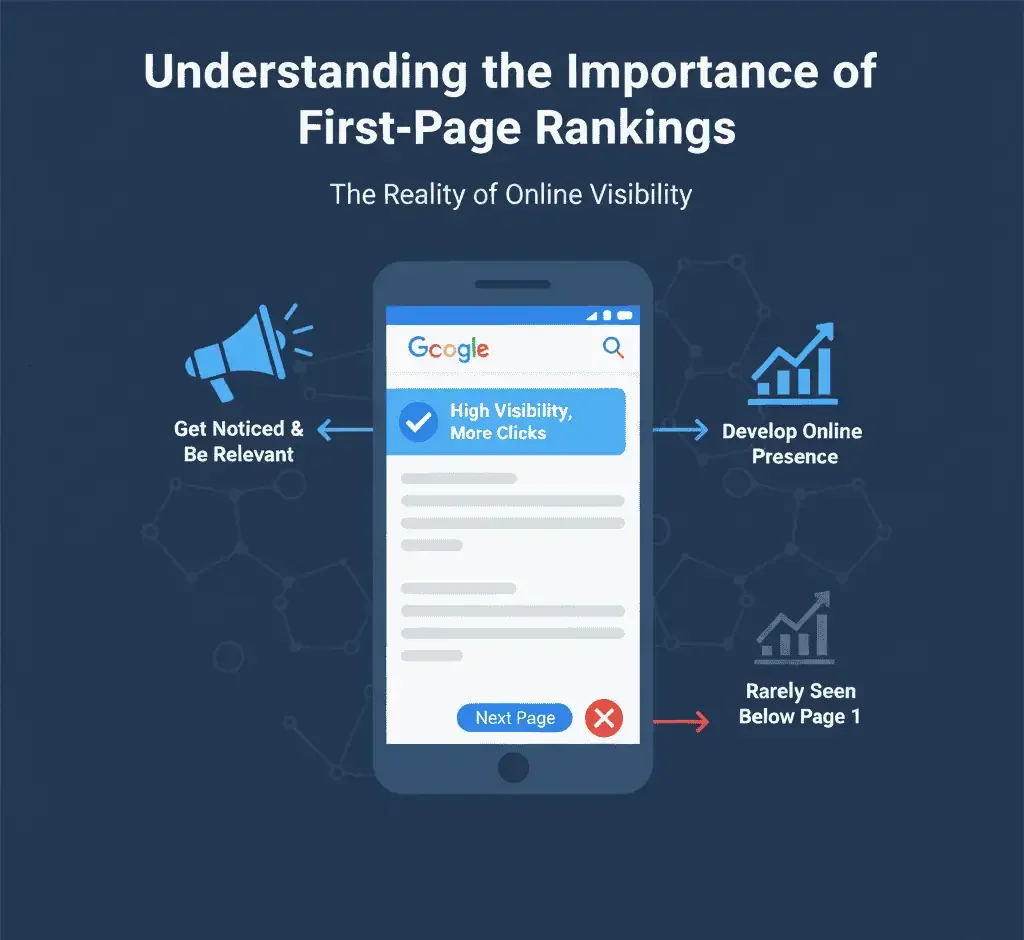
A diagram of a seo strategy.
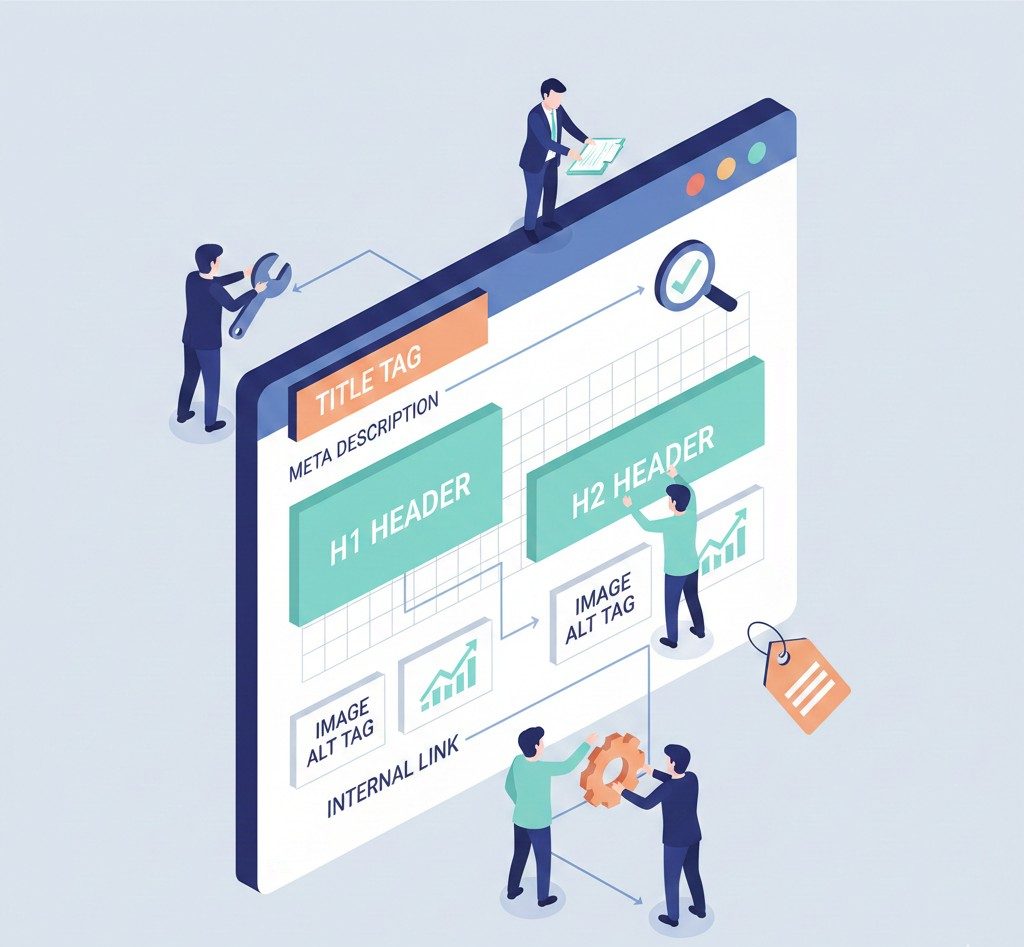
Illustration of people assembling a large web page with labeled SEO elements such as title tag, meta description, H1 and H2 headers, image alt tags, and internal links, emphasizing search engine optimization.
Declining Organic Search Traffic Causes
Not Every Traffic Drop Has the Same Cause
AI Overviews are one explanation — but they’re not the only one. Google ran multiple major core updates in 2024 and 2025, and during those updates, 79.5% of top-three URLs changed position and nearly a quarter of top-ten pages fell out of the top 100 entirely. If your traffic dropped around the time of a major update, that’s usually the first place we look. Beyond algorithm shifts, traffic can fall because of technical issues you’d never spot without digging — a misconfigured tracking tag that makes the drop look worse than it is, a page accidentally marked as “noindex,” a site speed problem that crept in after a plugin update, or a backlink that disappeared quietly. Content decay is another one: pages that ranked well two years ago slowly lose ground as fresher, more authoritative content takes their place. The right fix depends entirely on the real cause. Throwing more content at a technical problem won’t help. Fixing a tracking error won’t recover rankings lost to an algorithm update. We diagnose first, then act — using over 17 analytics applications to make sure we’re looking at the full picture before we recommend anything.

What's Included?

What Gets Better When Traffic Comes Back
Your phone starts ringing again with people who are actively searching for exactly what you offer.
You stop watching competitors rank above you and start watching your own listings push them down.
You’ll know what caused the drop — not just that it happened — so the same problem doesn’t blindside you again.
Your website works as a lead-generation tool again instead of a digital brochure nobody visits.
You get clear, plain-language reporting that tells you what’s improving and why — not just a spreadsheet of numbers.
You go into every month knowing your online presence is actively working, not slowly fading.

Let’s create an SEO strategy tailored to your business goals.

How it works

1

Validate the Drop Is Real

We cross-reference GA4 with Google Search Console first — because some "drops" are tracking errors, not ranking losses. Knowing the difference saves you time and money.

2

Diagnose the Actual Cause

Month-to-month agreements only. We stay accountable by earning your business every single month — not by locking you in.

3

Execute and Report in Plain Language

We've navigated every major Google shift since 2008. We know what recovery looks like and exactly what it takes to get there.

Frequently asked questions

This is the most common version of the problem, and it’s also the most disorienting — because the instinct is to assume that if you didn’t change anything, nothing should change. But your website isn’t the only variable. Google updates its algorithm constantly, and those updates can shift rankings significantly overnight without any warning. Your competitors may have strengthened their sites. A backlink you were benefiting from may have disappeared. Or — increasingly common — Google’s AI Overviews may now be answering your customers’ questions directly in search results, which means fewer people click through to any website, including yours. The drop is real. It’s just not your fault. But it still needs to be addressed.
This is one of the most confusing things happening in search right now, and most business owners have never heard a clear explanation for it. Google’s AI Overviews — those AI-generated summaries that appear above the regular search results — are now showing up on more than 13% of all U.S. desktop searches. When one appears, the click-through rate on everything below it drops dramatically. Studies show CTR falls from around 15% to just 8% when an AI Overview is present. On some query types, 83% of users never click anything at all. So your ranking tool can show you at position one while your actual traffic is cut nearly in half. Rankings and clicks are no longer the same thing, and any agency that’s still only tracking rankings is missing the bigger picture.
The timing is usually the first clue. If your traffic dropped sharply around a date when Google announced a core update — and Google ran multiple major updates in 2024 and 2025 — there’s a strong chance the update played a role. The next step is to open Google Search Console and look at your impressions and clicks over time. If impressions dropped alongside traffic, that’s a ranking signal. If impressions stayed stable but clicks fell, that points more toward AI Overviews or a change in how your listing appears in search results. We do this diagnostic cross-referencing as the first step for every client, because misidentifying the cause leads to the wrong fix — and the wrong fix wastes time and money.
It depends on what caused the drop and how quickly the right fix is applied. Technical issues — like a misconfigured tracking tag, a noindex error, or a site speed problem — can often be corrected within days, and you may see traffic respond within a few weeks once Google recrawls your site. Algorithm-related drops take longer. If Google’s update downgraded your content or your site’s overall authority, rebuilding that trust typically takes two to six months of consistent work. The worst thing you can do is wait and hope it resolves on its own. Most algorithm-driven drops don’t self-correct — and every month you wait is another month your competitors are pulling further ahead.
Yes — and this is actually the first thing we check. Google Analytics 4 (GA4) can produce misleading data if the tracking code was installed incorrectly, if a filter was misconfigured, or if a recent website update broke the tracking tag. We’ve seen situations where a business owner panicked over a 40% traffic drop that turned out to be a GA4 setup issue — their actual traffic was fine. The way to confirm is to compare GA4 session data with Google Search Console impression data. Search Console pulls directly from Google’s index, so it doesn’t rely on your tracking code. If GSC shows the same drop, the problem is real. If GSC looks normal, you may just have a tracking issue. We run this check first, every time, before recommending any changes.
Running paid ads during an organic traffic recovery isn’t a bad idea — it can bridge the gap and keep leads coming in while the underlying issue is being fixed. We offer Google Ads, Local Service Ads, and other paid channels for exactly this reason. But paid ads don’t fix the organic problem. If you only run ads and ignore the reason your organic traffic dropped, the gap keeps widening. You end up paying for every single click indefinitely, while your competitors’ organic presence grows stronger. The right approach is to address both: stabilize lead flow with paid advertising in the short term while systematically recovering your organic visibility for the long term. That’s what a real recovery looks like — and it’s what we help our clients build.