4.8 · 100+ Google Reviews
· Mon–Fri 9AM–5PM EST
Get A Proposal

Why Isn't My Website in AI Search?

Your Best Leads Are Finding Someone Else
If your business isn’t showing up in ChatGPT, Perplexity, or Google AI Overviews, you’re invisible to customers who’ve already decided to buy. AI search optimization is how we fix that.
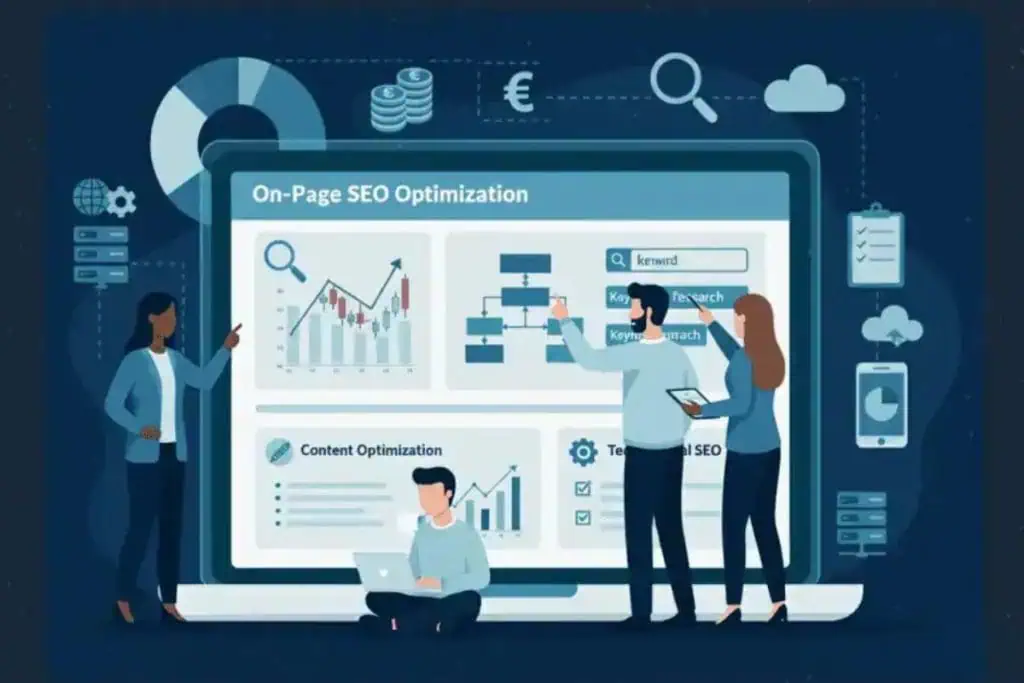
Illustration of four people analyzing on-page SEO optimization data on a large screen, with graphs, charts, search bars, and icons representing digital marketing, content, and technical SEO in the background.
Why Isn’t My Website Appearing in AI Search? Long Island

What Makes Hozio Different

Google and Meta Certified

Third-party certified on the platforms that matter most — so every strategy we build is grounded in verified expertise, not guesswork.

No Long-Term Contracts

We work month-to-month because we believe results should keep clients around — not paperwork. No risk, no lock-in.

50-Plus In-House Specialists

Every campaign is handled by our own team of 50-plus specialists — no outsourcing, no handoffs to strangers, no dropped balls.

AI Search Visibility Explained
A New Game With Completely Different Rules
You’ve heard of SEO. You may have even invested in it. But AI search — the answers ChatGPT, Perplexity, and Google AI Overviews generate when someone asks a question — works nothing like a traditional search results page. There’s no list of ten blue links. There’s one answer. Sometimes two. And if your business isn’t in it, the customer moves on without ever knowing you existed. This is called generative engine optimization, or GEO. It’s the process of making your website and your brand visible to the AI tools that are now handling hundreds of millions of searches every single day. It’s not a future concern. It’s a right-now problem — and it’s one we know how to solve.

Ready to Rank Higher and Grow?

Why Google Rankings Aren't Enough

Your Google Rank Doesn't Protect You Here

This is the part that surprises most business owners. You can rank on page one of Google and still be completely absent from every AI-generated answer. That’s not a theory — it’s what’s happening to thousands of businesses right now. Here’s why. ChatGPT doesn’t use Google’s index. It uses Bing’s. If your website isn’t indexed in Bing — and many aren’t, because most SEO work focuses on Google — ChatGPT’s browsing capability simply cannot find you. On top of that, AI platforms don’t select content the way search engines rank pages. They look for content that’s structured to be extracted, brands that are mentioned across credible third-party sources, and websites that haven’t accidentally blocked their crawlers. That last point matters more than most people realize. Research shows that over 35% of the top 1,000 websites block GPTBot — the crawler that feeds ChatGPT — most of them by accident, through a single line in their robots.txt file. One line of code, and you’re invisible. We check for exactly this kind of issue as part of every AI visibility audit we run.
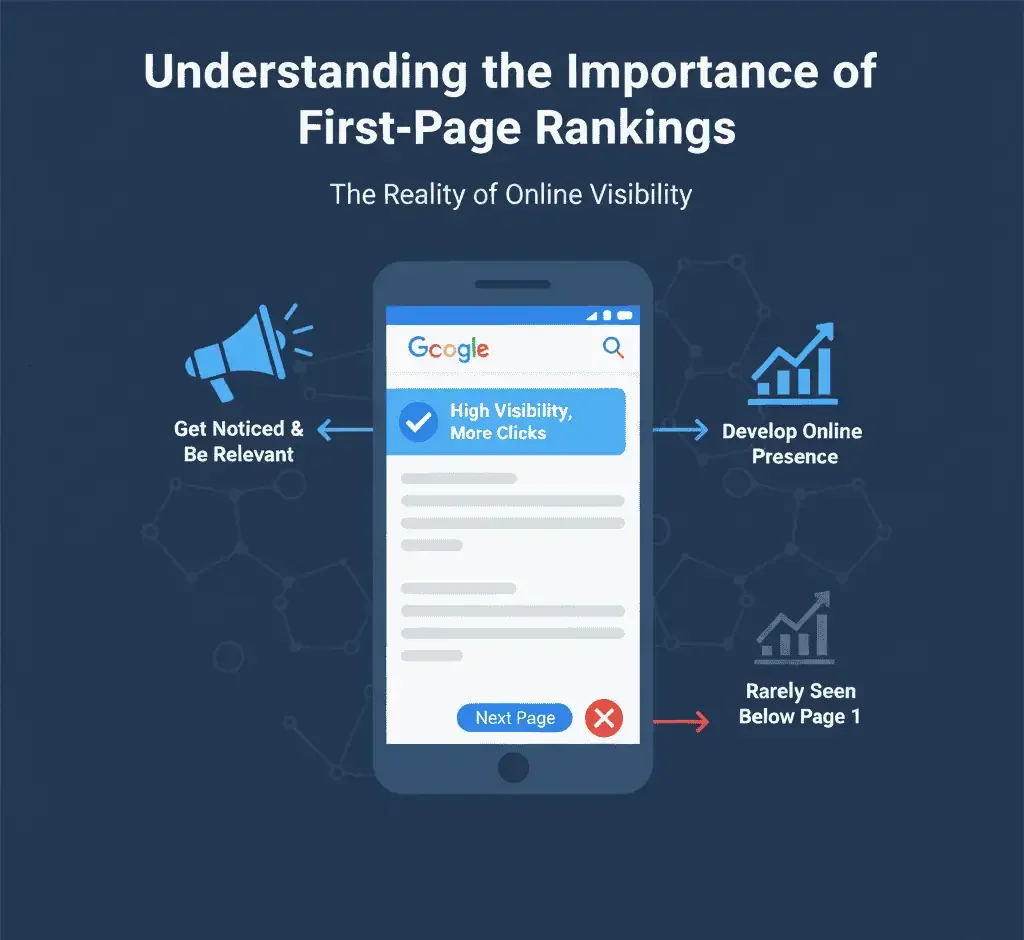
A diagram of a seo strategy.
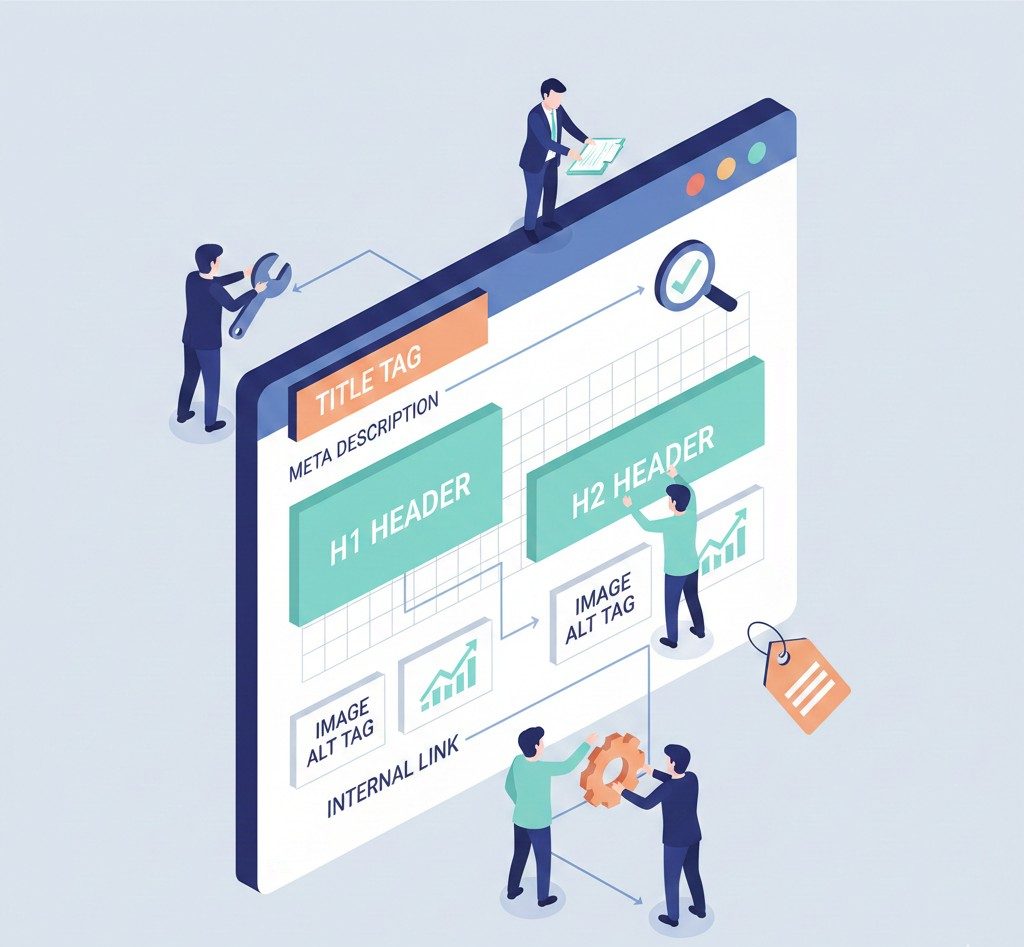
Illustration of people assembling a large web page with labeled SEO elements such as title tag, meta description, H1 and H2 headers, image alt tags, and internal links, emphasizing search engine optimization.
How Generative Engine Optimization Works
What We Actually Do to Get You Cited
GEO isn’t keyword stuffing with a new label on it. Research from Princeton, Georgia Tech, and IIT Delhi — published at KDD 2024, the first major academic study of its kind — found that traditional SEO tactics perform poorly in generative contexts. What works is different: content structured to lead with direct answers, FAQ schema markup that AI tools can extract cleanly, and brand mentions built across the kinds of credible third-party sources that AI platforms treat as verification. We audit your robots.txt to make sure AI crawlers like GPTBot and PerplexityBot can actually access your site. We verify your Bing indexation. We implement structured data. We build the entity signals — consistent business information across directories, review platforms, and authoritative sources — that tell AI tools your business is real, relevant, and worth recommending. The same study found that adding statistics and structured content can boost AI visibility by up to 40%. That’s the kind of measurable, evidence-based approach we bring to every client.

What's Included?

What Changes When AI Can Find You
Customers who arrive from ChatGPT are already sold on the category — they just need to find the right business, and that can be yours.
You stop losing leads silently — AI invisibility doesn’t show up in your analytics, but the missed calls absolutely show up in your revenue.
Your business gets recommended by name when someone asks an AI tool for the best option in your industry.
You appear in Google AI Overviews, which now show up in nearly half of all Google searches — including searches your existing SEO already targets.
Your brand builds authority across the third-party sources — directories, review platforms, media — that AI tools rely on to verify who you are.
You gain a measurable edge over competitors who are still treating AI search like something to deal with later.

Let’s create an SEO strategy tailored to your business goals.

How it works

1

Free SEO Demo and Audit

We start with a free 15-minute demo that shows exactly where your business stands in AI search — no guesswork, no pressure.

2

Technical and Content Fixes

We work month-to-month because we believe results should keep clients around — not paperwork. No risk, no lock-in.

3

Authority and Visibility Building

Every campaign is handled by our own team of 50-plus specialists — no outsourcing, no handoffs to strangers, no dropped balls.

Frequently asked questions

There are usually a few reasons, and they’re almost never about your website’s design or loading speed. The most common culprit is a robots.txt configuration that’s accidentally blocking AI crawlers like GPTBot or PerplexityBot — this happens to more than 35% of websites, often without the owner ever knowing. Beyond that, ChatGPT uses Bing’s index rather than Google’s, so if your site isn’t indexed in Bing, ChatGPT’s browsing capability simply can’t find you. Missing structured data, weak entity signals across third-party sources, and content that isn’t formatted for extraction are the other major factors. All of these are fixable once they’re identified.
Only partially, and less than most people expect. Some of the foundational work — quality content, a well-structured site, strong backlinks — creates a base that GEO builds on. But AI platforms like ChatGPT, Perplexity, and Google AI Overviews use different selection criteria than traditional search. ChatGPT doesn’t pull from Google’s index at all — it uses Bing. And all AI tools prioritize content that’s structured for extraction, brands with consistent mentions across credible third-party sources, and websites that AI crawlers can actually access. A page-one Google ranking provides no guarantee of AI visibility. The two require separate, complementary strategies.
The fastest way to check is to look at your robots.txt file — it’s typically found at yourdomain.com/robots.txt. If you see a “Disallow: /” rule under a user-agent that includes GPTBot or a wildcard that catches all bots, your site is blocking AI crawlers. Many businesses block AI crawlers through broad wildcard rules that were set up years ago for unrelated reasons — nobody made a deliberate choice to hide from ChatGPT. As part of our AI visibility audit, we check your robots.txt configuration, verify your Bing indexation, and identify any other technical barriers that are keeping AI tools from finding and citing your business.
Schema markup — also called structured data — is code added to your website that helps search engines and AI tools understand what your content means, not just what it says. For AI search specifically, FAQ schema is one of the highest-impact changes you can make. When your content is marked up correctly, AI tools can extract clean, accurate answers from your pages and attribute them to your business. Without it, even well-written content can be overlooked because the AI has no reliable way to parse and cite it. Most small business websites have zero schema markup in place, which means this is often one of the first and most impactful fixes we implement.
It depends on where you’re starting from, but technical fixes like unblocking AI crawlers and submitting to Bing can produce measurable changes relatively quickly — sometimes within weeks. Content and authority work takes longer because AI tools weight credibility signals that accumulate over time, like consistent brand mentions across directories, review platforms, and industry sources. Every month you’re not optimized for AI search is a month your competitors have the floor to themselves. We track results so you can see the progress from completely absent to actively cited. The free demo is the fastest way to understand where you stand right now.
The data makes a strong case that it is. Visitors who arrive from ChatGPT convert at 15.9% — compared to 1.76% for visitors from traditional organic search. That’s nearly a nine-times difference in conversion rate, which means AI search isn’t just about visibility — it’s about getting in front of people who are already ready to make a decision. Consider that 58% of consumers have already replaced traditional search with AI tools for product and service discovery. These aren’t enterprise buyers — they’re everyday people looking for a plumber, a consultant, a contractor, a dentist. If your business serves people, AI search is where a growing share of those people are starting their search. We work with small businesses across industries, and the impact is real.