4.8 · 100+ Google Reviews
· Mon–Fri 9AM–5PM EST
Get A Proposal

Mobile App Development Services Long Island & NYC

Your App Built, Launched, and Actually Found
Most businesses in Long Island and NYC end up with a finished app and no plan to drive downloads or visibility. We build your app and market it — under one roof, with one team that knows your goals.
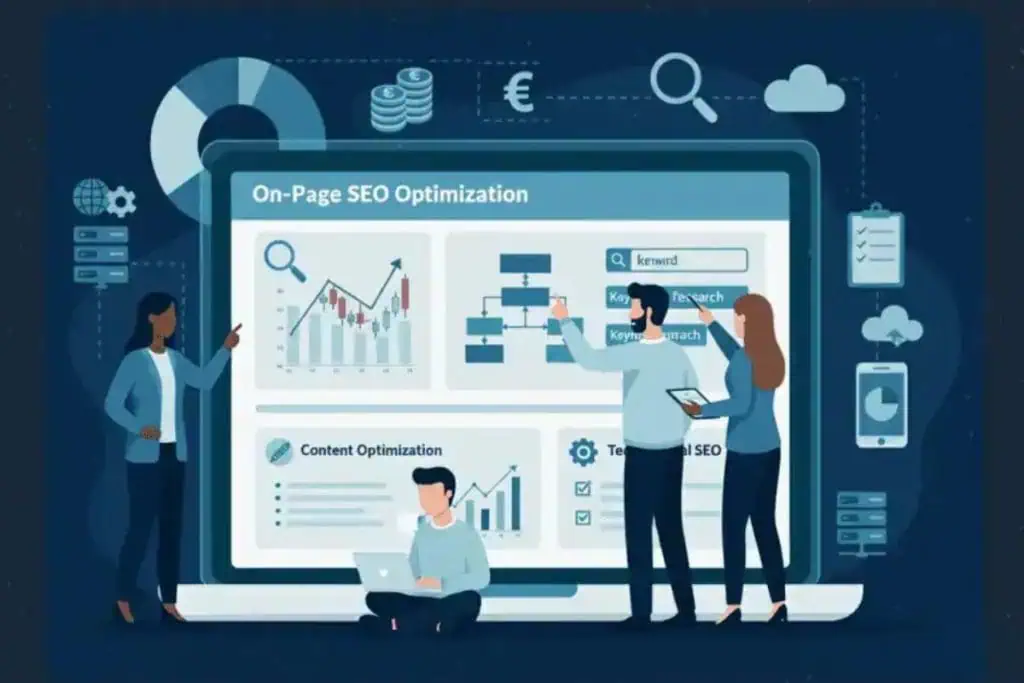
Illustration of four people analyzing on-page SEO optimization data on a large screen, with graphs, charts, search bars, and icons representing digital marketing, content, and technical SEO in the background.
Mobile App Development Long Island

Why Long Island & NYC Businesses Choose Hozio

17 Years of Local Accountability

We have been based in Holbrook, NY for over 17 years, serving 550+ clients across Long Island and NYC with documented, measurable results.

No Long-Term Contracts

Every engagement runs month-to-month. You stay because the work delivers — not because a contract forces you to.

Dedicated Client Success Manager

You get a named point of contact who knows your project from day one — not a rotating support queue or anonymous help desk.

Custom Mobile App Development Long Island & NYC
What a Real App Development Agency Does
A mobile app is not just a smaller version of your website. It is a direct channel to your customers — one that lives on their phone, sends them notifications, works offline, and gives them a reason to keep coming back. When it is built well and marketed properly, it becomes one of the most powerful tools a business can have. We offer full-cycle mobile app development services for businesses across Long Island and NYC — from the first strategy conversation through design, development, testing, App Store and Google Play submission, and post-launch support. Whether you need an iOS app, an Android app, or a cross-platform build that covers both, we handle the entire process in-house. What makes us different is what happens after the app is live. Most development shops hand you a finished product and disappear. We are also a full-service digital marketing agency, which means we can handle App Store Optimization, SEO for your app’s web presence, and paid campaigns to drive downloads — all from the same team that built the app.

Ready to Rank Higher and Grow?

iOS and Android App Development Services NYC

Built for Every Platform Your Customers Use

The question of iOS versus Android is one we hear constantly, and the honest answer is: it depends on your customers and your budget. If your audience skews toward iPhone users — common in the Long Island and NYC market, where Apple device adoption is high — a native iOS app built with Swift delivers the sharpest performance and the most seamless App Store experience. If you need Android coverage, we build with Kotlin and Jetpack Compose. And if you need both platforms without doubling your development costs, cross-platform frameworks like React Native and Flutter are a legitimate, high-performance option that most businesses never need to move away from. We do not push one approach over another to pad a project budget. We ask about your users, your goals, and your timeline — and then we recommend what actually fits. That conversation is free, and it happens before any proposal is on the table.
A diagram of a seo strategy.
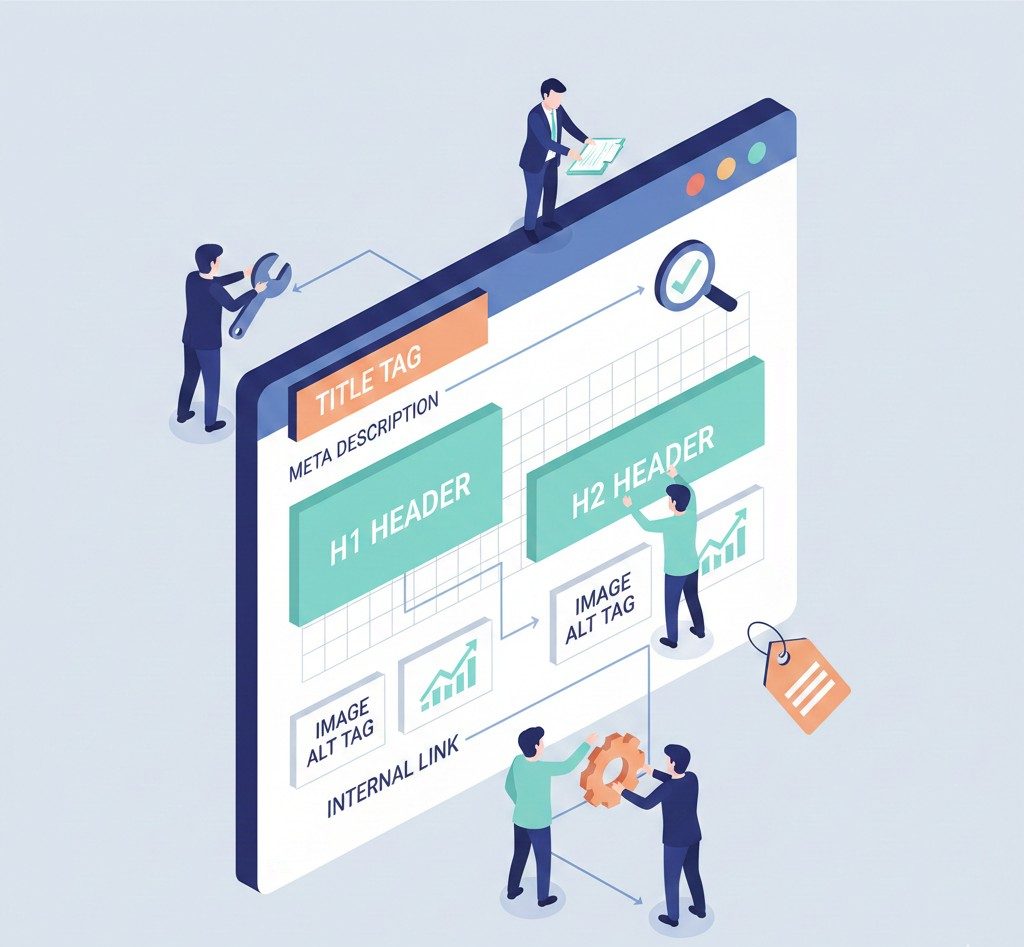
Illustration of people assembling a large web page with labeled SEO elements such as title tag, meta description, H1 and H2 headers, image alt tags, and internal links, emphasizing search engine optimization.
App Development Agency Long Island & NYC
The Only App Partner That Also Markets It
Here is something most app development companies will not tell you: building the app is only half the job. If nobody downloads it, it does not matter how well it was built. Long Island and NYC are two of the most competitive business markets in the country. A restaurant in Huntington, a healthcare practice in Garden City, a professional services firm in Melville — they are all competing for attention on the same devices their customers carry every day. When you work with us on mobile app development services in Long Island and NYC, you are not just getting a development team. You are getting an agency that can also run App Store Optimization to improve your ranking in search results on the App Store and Google Play, build out the SEO strategy for your app’s landing page, and run paid campaigns to drive real downloads from real users. That is a capability no standalone app development shop can offer — and it is the reason our clients see results that go beyond a launch day.

What's Included?

What You Actually Get From a Well-Built App
Your customers can book, order, or reach you directly from their phones without hunting through a browser.
Push notifications keep your brand in front of customers in a way that emails and social posts simply cannot match.
A custom app sets you apart from competitors in your market who are still relying on a mobile website alone.
You own the code — no platform dependency, no monthly subscription to a builder that can change its terms overnight.
AI-ready architecture means your app can grow with your business and integrate smart features as your needs evolve.
A single team handles your app and your marketing, so your launch has a real strategy behind it from day one.

Let’s create an SEO strategy tailored to your business goals.

How it works

1

Discovery and Strategy Session

We learn your business, your users, and your goals — then define the scope, platform, and feature set that actually makes sense.

2

Design, Build, and Test

Every engagement runs month-to-month. You stay because the work delivers — not because a contract forces you to.

3

Launch, Support, and Market

You get a named point of contact who knows your project from day one — not a rotating support queue or anonymous help desk.

Frequently asked questions

A mobile-friendly website is a webpage that adjusts its layout for a smaller screen. A mobile app is a standalone product installed directly on a user’s device. The difference matters because apps can send push notifications, work without an internet connection, access device hardware like the camera and GPS, and deliver a significantly faster, more immersive experience than any browser-based site. For businesses in Long Island and NYC where customers are making decisions on the go — commuting on the Long Island Rail Road, navigating Manhattan, or searching for local services from their phones — a well-built app creates a level of engagement that a website simply cannot replicate. If your goal is to keep customers coming back, an app gives you a direct line to their home screen.
Cross-platform development means building a single codebase that runs on both iOS and Android devices, using frameworks like React Native or Flutter. The practical benefit for most small and mid-sized businesses is significant: you reach users on both platforms without paying to build and maintain two entirely separate apps. For the majority of business use cases — customer-facing apps, booking tools, loyalty programs, internal dashboards — cross-platform performance is indistinguishable from native. Native development in Swift for iOS or Kotlin for Android makes more sense when an app requires deep hardware integration, complex graphics processing, or a very specific platform feature that cross-platform frameworks do not yet support well. We walk through this distinction with every client before recommending an approach, because the right answer depends on your users and your goals — not on what is easier for us to build.
The honest answer is that it depends heavily on the complexity of the app, the number of platforms you need to cover, and how clearly the requirements are defined going in. A focused MVP — a minimum viable product that covers the core user journey without every feature you eventually want — can typically be designed, built, and submitted to the App Store and Google Play in three to five months. A more complex app with custom integrations, multiple user roles, or AI-powered features will take longer. One of the most common reasons projects run over schedule is scope creep — features that get added mid-development without adjusting the timeline. Our discovery phase exists specifically to prevent that. We define the scope before development begins, and we stick to it.
Most businesses do not need to launch on both platforms simultaneously. If you are launching a new app concept and want to validate it before committing to full-scale development, starting with one platform is a reasonable approach. In the Long Island and NYC market, iPhone users represent a large share of the consumer base, which often makes iOS the logical first choice. That said, if your customer base skews Android — common in certain industries and demographics — starting there makes more sense. We look at your actual audience before making a recommendation. And if budget is a constraint, a cross-platform build is often the most practical path to reaching both iOS and Android users from a single development effort.
This is the question most businesses forget to ask before they sign with a development agency — and it is one of the most important ones. Operating systems update regularly. Apple and Google both change their App Store guidelines and review standards on an ongoing basis. Security vulnerabilities get discovered. Users request new features. An app that is not actively maintained will fall behind, and eventually it will stop working as expected or fail to pass App Store review. We offer post-launch support as part of our ongoing engagement model, which means you have a team available to handle updates, patches, and new feature development after your app goes live. Because we operate on a month-to-month basis with no long-term contracts, you are never locked in — but most clients stay because the ongoing support is genuinely useful.
Yes — and the assumption that custom apps are only for large enterprises is one of the most persistent misconceptions in this space. The rise of cross-platform development frameworks has dramatically reduced the cost and time required to build a high-quality mobile app. Businesses across Long Island — from independent healthcare practices in Nassau County to retail shops in Huntington to professional services firms in the Long Island Innovation Park at Hauppauge — are building custom apps that serve their specific customers without the price tag of a Fortune 500 project. The smarter question is not whether you can afford a custom app, but whether you can afford to keep watching competitors who have one pull further ahead. We offer a no-pressure proposal process so you can see exactly what a build would look like for your business before committing to anything.