- Written by Hozio
- April 22, 2026
- 3 Minute Read
How AI Search Is Changing SEO for Agencies
Search used to be simple. Someone typed a query, Google showed a list of links, and the user clicked one. If you ranked in the top three, you won.
That model is breaking down. AI-powered search engines now synthesize answers from multiple sources and display them directly on the results page. Users get what they need without ever visiting a website.
According to recent data, 16% of all Google queries now trigger AI Overviews. For informational searches, that number climbs even higher. ChatGPT accounts for 20% of search-related traffic worldwide. And in Google’s AI Mode, 93% of searches end without a single click to an external site.
What Zero-Click Search Means for Your Clients
Zero-click search isn’t new, but AI has accelerated it dramatically. When someone searches for “best SEO practices” or “how to optimize Google My Business,” they’re increasingly getting a full answer right there in the search results.
For your clients, this creates a visibility crisis. Their content might still rank well in traditional organic results, but if an AI Overview appears above them, most users never scroll down. The first organic result gets pushed down by over 140% in vertical scroll distance when an AI Overview is present. On mobile, users often have to scroll through multiple screens before they even see the first traditional link.
This doesn’t mean SEO is dead. It means the game has changed. The goal is no longer just to rank. It’s to be cited within the AI-generated answer itself. When Google’s AI Overview pulls information to answer a query, you want your client’s brand to be the source it references.
Think about it from a user’s perspective. If they ask ChatGPT or Google AI Mode for a recommendation, and your client’s business is mentioned as a trusted solution, that’s more valuable than a traditional ranking. It’s an endorsement from the AI itself.
The agencies that understand this shift are already adapting. They’re optimizing content not just for crawlers and algorithms, but for extraction and citation. They’re structuring information so AI models can easily pull key facts and attribute them to the right source. And they’re tracking new metrics like citation frequency and share of voice across AI platforms.
If your agency isn’t doing this yet, your clients are losing ground to competitors who are. The window to establish dominance in AI search is open right now, but it won’t stay that way forever. Once paid advertising fully monetizes these AI platforms—and it’s coming—organic visibility will be harder to earn.
Looking for ways to improve your customer growth?
Why Traditional SEO Tactics Aren't Enough Anymore
Let’s be clear: traditional SEO fundamentals still matter. Technical optimization, quality content, backlinks, site speed—all of that remains essential. But it’s no longer sufficient on its own.
AI search engines don’t just look at keywords and backlinks. They evaluate content for extractability, clarity, and trustworthiness. They prioritize pages that provide direct answers in a format that’s easy to understand and cite. They favor structured data, clear definitions, and FAQ sections that map to common user questions.
If your content is keyword-optimized but difficult for AI to parse, you’re invisible in this new landscape. If your client’s website doesn’t use schema markup to help AI understand what the page is about, they’re at a disadvantage. If their brand isn’t mentioned in high-authority sources that AI models trust, they won’t get cited.
Here’s where it gets tricky for agencies. Many of your competitors are marketing themselves as “AI SEO experts” even if they’re just using ChatGPT to write blog posts faster. That’s not an AI strategy. That’s automation without understanding.
A real AI SEO strategy means optimizing for how AI models retrieve, evaluate, and cite content. It means building topical authority so deep that when an AI looks at your client’s site, it sees a concentrated density of expertise. It means ensuring your client’s business information is consistent across Google Business Profile and Apple Business Connect, because both platforms feed into AI-driven local search.
It also means tracking the right metrics. Traditional SEO focuses on rankings, traffic, and conversions. AI SEO adds citation frequency, share of voice in AI-generated responses, and visibility across platforms like ChatGPT, Perplexity, and Google AI Overviews. If you’re not measuring these, you can’t optimize for them.
The agencies that win in 2026 and beyond will be the ones that treat AI as infrastructure, not a trend. They’ll integrate AI optimization into every part of their workflow—keyword research, content creation, technical audits, reporting. They’ll educate their clients on what’s changing and why it matters. And they’ll deliver results that go beyond vanity metrics to drive real business outcomes.
How to Build an AI Strategy for Your SEO Agency
Building an AI strategy doesn’t mean throwing out everything you know. It means expanding your toolkit to include optimization for AI-driven discovery.
Start with an audit of where your clients currently stand in AI search. Use tools to check if AI platforms like ChatGPT, Perplexity, or Google AI Overviews are citing your clients’ brands. If they’re not showing up, you have a visibility gap that needs to be addressed.
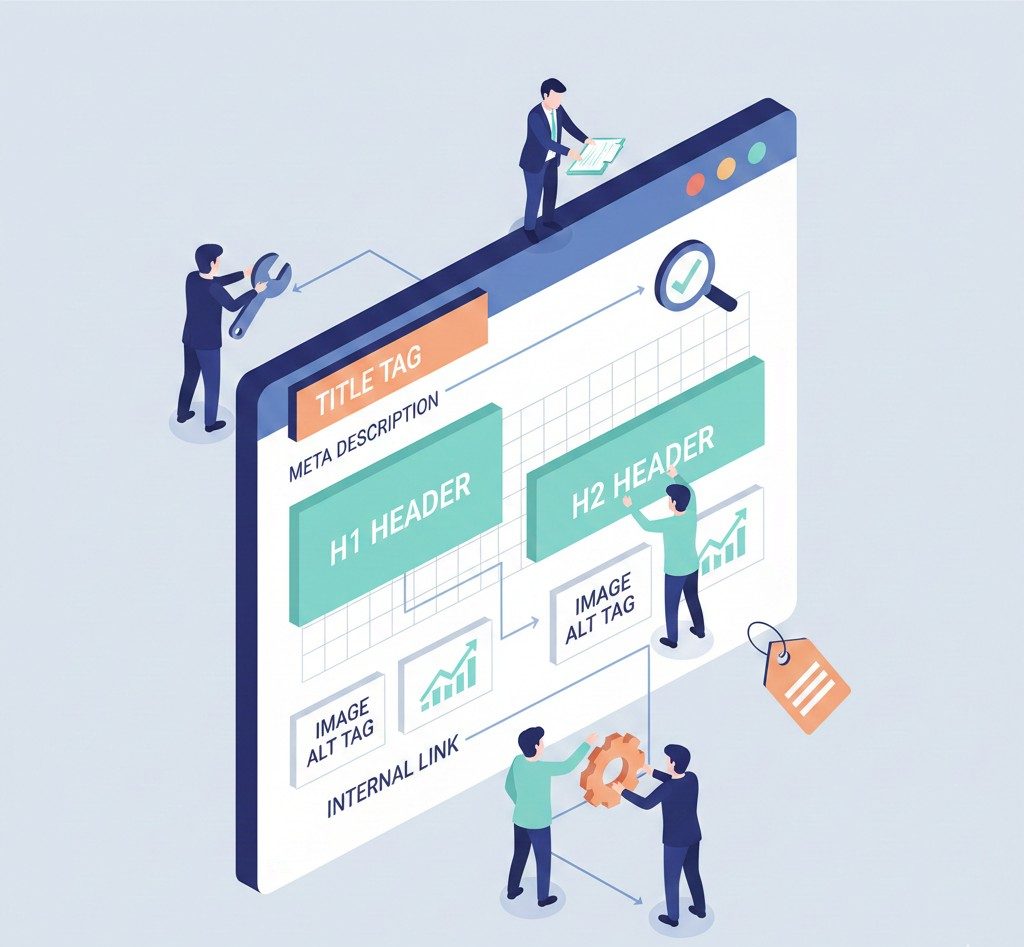
Next, focus on content structure. AI models favor content that’s easy to extract and cite. That means using clear headings, concise paragraphs, and direct answers to common questions. FAQ sections work particularly well because they map directly to how users phrase queries in conversational search.
Optimizing Google My Business and Apple Business Connect for AI Search
Local SEO is evolving fast, and most agencies are only covering half the equation. Google My Business has been the gold standard for local visibility, but Apple Business Connect is rapidly becoming just as important.
Apple Business Connect allows businesses to control how they appear across Apple Maps, Siri, Apple Wallet, and other Apple services. With over 1.3 billion iOS users worldwide, that’s a massive audience. And because Apple Maps is the default navigation tool for iPhone users, businesses that aren’t listed there are invisible to a significant portion of local searchers.
Here’s why this matters for AI strategy: both Google and Apple are integrating AI into their local search experiences. When someone uses Siri to find “the best SEO agency near me” or asks Google AI Mode for local recommendations, the platforms pull information from these business profiles to generate answers.
If your client’s Google My Business profile is incomplete or inconsistent, AI models have less confidence in the information. If they’re not on Apple Business Connect at all, they’re missing out on an entire channel of AI-driven discovery.
Optimizing these profiles means more than just filling out basic information. It means using consistent NAP data across all platforms, adding high-quality images, responding to reviews, publishing regular updates, and leveraging features like service listings and booking actions. It also means implementing local schema markup on your client’s website so AI models can easily connect the business to its physical location and service area.
The agencies that master this dual-platform approach will have a significant advantage. They’ll be able to show clients visibility gains not just in traditional search, but in the AI-powered tools that more and more people are using to make decisions.
Creating Content That AI Models Trust and Cite
AI models are risk-averse. They prioritize content from sources they perceive as authoritative, trustworthy, and accurate. If your client’s content doesn’t meet those criteria, it won’t get cited.
Building that trust starts with topical authority. Instead of writing surface-level blog posts on a dozen different topics, focus on going deep in one area. Create comprehensive guides, detailed case studies, and expert-level resources that demonstrate real knowledge. Link related content together to show how concepts connect. Use semantic variety—related terms, entities, and concepts—rather than just repeating the same keywords.
AI models also look for E-E-A-T: Experience, Expertise, Authoritativeness, and Trustworthiness. That means showcasing credentials, citing reputable sources, including author bios, and demonstrating real-world experience. If your client is a local business, highlight their years in operation, customer testimonials, and community involvement.
Structured data plays a critical role here. Schema markup helps AI models understand what your content is about and how it should be categorized. FAQ schema, article schema, local business schema—these all make it easier for AI to extract and cite information accurately.
Another often-overlooked factor is brand mentions. AI models track how often a brand is mentioned across the web, not just on the brand’s own site. Getting mentioned in high-authority publications, industry forums, and reputable directories signals to AI that the brand is legitimate and worth citing.
Finally, focus on content that provides clear, direct answers. AI doesn’t want to sift through fluff or marketing speak. It wants to extract a specific piece of information and attribute it to a source. Structure your content to make that easy. Use headings that mirror common search queries. Start paragraphs with the answer, then provide supporting details. Break complex topics into scannable sections.
The agencies that master this approach will see their clients’ content cited more frequently in AI-generated answers. And as AI search continues to grow, those citations will translate into visibility, credibility, and ultimately, business results.
What SEO Agencies Need to Do Next
AI search isn’t replacing traditional SEO. It’s expanding it. The agencies that thrive in the next few years will be the ones that integrate both approaches into a unified strategy.
That means optimizing for rankings and citations. Building topical authority and structured data. Tracking organic traffic and AI share of voice. Educating clients on what’s changing and why it matters.
If you’re running an SEO agency in NYC, Long Island, or anywhere else, now is the time to build your AI strategy. The landscape is shifting fast, and the agencies that adapt early will have a significant competitive advantage. We’ve been helping clients navigate this transition, optimizing for both traditional search and emerging AI platforms to ensure visibility wherever customers are searching.